.svg)

.svg)
.webp)
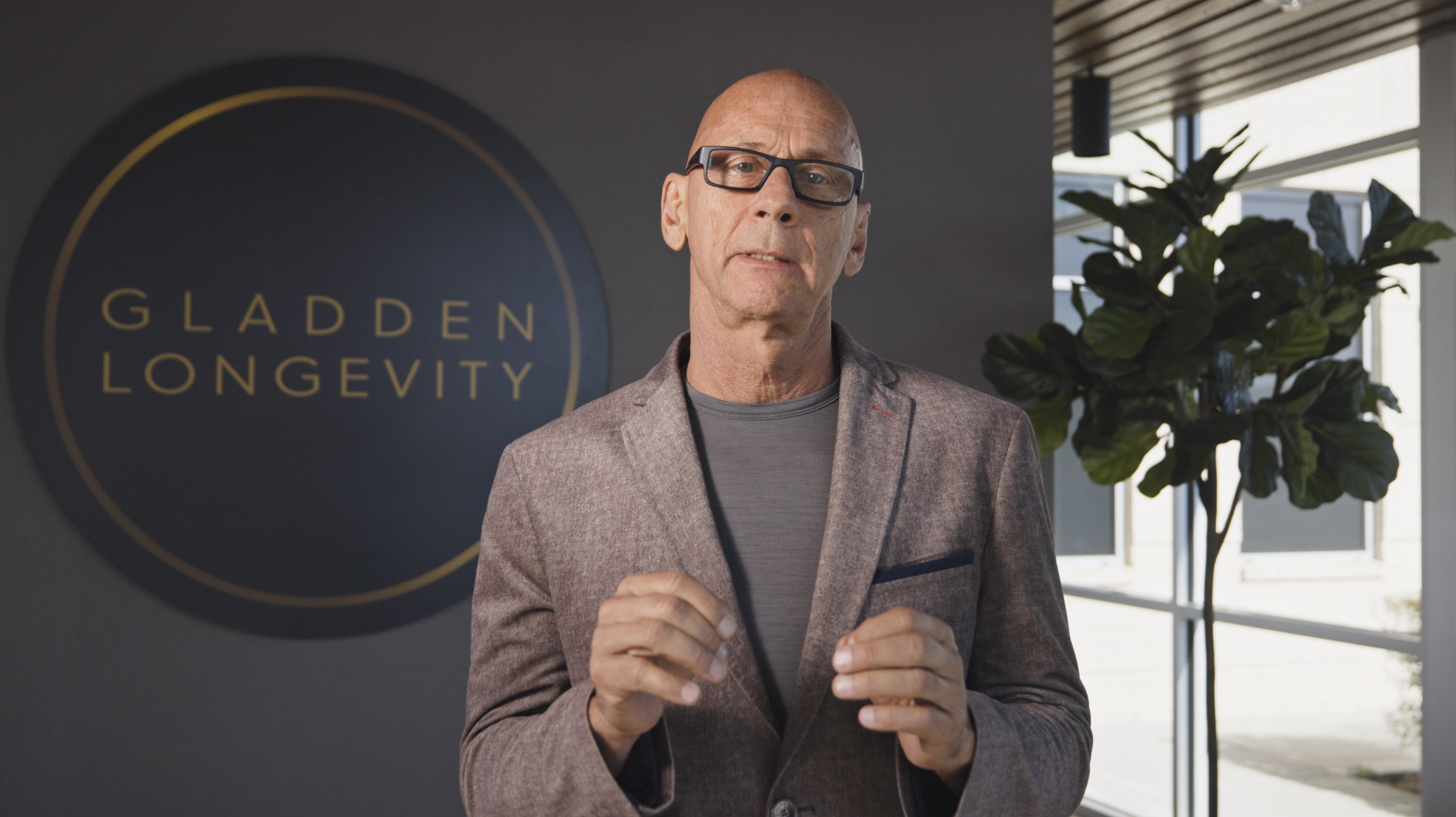
What if growing older didn't have to mean slowing down? That's the question Dr. Jeffrey Gladden has spent decades exploring through his work in longevity medicine. As the founder of what many consider the best longevity clinic in Dallas, he is helping redefine what healthcare can look like by taking a comprehensive approach to extending not only lifespan but also healthspan.
This interview is the first installment in a three-part monthly Q&A series with Dr. Gladden. Each conversation explores a different aspect of longevity medicine and healthy aging. In this first installment, Dr. Gladden shares his perspective on what it truly means to "Live Young For A Lifetime!!!" He discusses the mindset behind healthy aging, the roles genetics and lifestyle play in longevity, and why he believes aging is far more adaptable than most people realize. He also explains how emerging technologies could reshape the future of longevity medicine and what practical steps anyone can take to start living younger today.
Q: When You Say "Live Young For A Lifetime!!!," What Does That Actually Mean?
Dr. Gladden: That's actually a great question. You can almost rephrase it as, "What does longevity actually mean?" Is it simply that we're going to live a long time? That we'll be able to play golf longer or stay healthy enough to play with our grandkids and great-grandkids?
The way I think about it is that longevity represents humanity's greatest opportunity to elevate the human experience. Humanity has never had a population of people who are physically very youthful — a 30-year-old body at age 100, let's say — while also possessing a tremendous amount of wisdom, perspective, and insight, which is the concept of the 300-year-old mind.
When I talk about living young for a lifetime, there are several elements to it. The obvious one is being physically youthful and able to do anything you want. Anything you want to do physically, you can do. Mentally, you're sharp and coordinated.
There's more to it than that, though. Living young means staying curious. It means having a playful attitude and being willing to try new things. As people go through life, they are unfortunately graded on their competence. If they get the right answers, they get the right grade. If they become competent at work, they get promoted, get paid, and build their identity around performance. Competency becomes the currency of identity.
But I think living young for a lifetime means rejecting that. We had some of the most fun in our lives when we were five years old, playing in a sandbox. We were trying new things all the time. When a scooter went by, we wanted to jump on it. If there was a new tree, we wanted to climb it. We were constantly challenging ourselves and learning.
Living young for a lifetime means going through life with that same eternal sense of curiosity, playfulness, and fun because that's what brings people joy. It doesn't mean you aren't serious or capable of solving important problems. It simply means you approach life from a place of joy rather than from the task-oriented, performance-driven mindset we've been conditioned to adopt.
The other side of it is developing that 300-year-old mind. This means you carry wisdom and perspective with you. You begin to see things for what they are, and for what they're not. You come to understand that relationships, self-mastery, and the ability to experience joy are what truly matter. You also have the opportunity to heal old traumas, which frees you to regain a youthful mindset rather than living in reaction to the past.
When you think about living young for a lifetime, it's really about rebooting both the nervous system and the physical system while layering in the wisdom, perspective, and transcendence that come with experience.
The beauty of that is that if we have a population of people living this way, the world will experience something it has never seen before. Those people can make contributions to their families, their communities, society, and the planet that we've never witnessed before. That's what excites me. It gets me excited every day to wake up and live into that vision.
Q: Would You Say That Curiosity, Joy, and Playfulness Are Central to the Way You Care for Patients?
Dr. Gladden: Yes, absolutely.
We're developing so many new tools and cutting-edge integrations between AI, functional medicine, and traditional medicine. One of the biggest problems with medicine today is that we've sliced and diced the body into different parts and pieces. You have a specialist for every area, and then you have a family doctor trying to stitch everything together. But nobody is really looking at the whole person from a truly comprehensive point of view.
The way we've gone about that is to break it down into five circles. The first circle is life energy, which is the psycho-spiritual space. Inside that is longevity itself, which includes the hallmarks of aging that both express and accelerate the aging process. Then you have the health circle, which encompasses all the body's organ systems. Next is performance, which includes strength, agility, balance, cardiovascular capacity, flexibility, and mobility. Finally, there are the environments we live in. We have to intentionally design those environments to reduce toxins, eliminate unhealthy relationships, and create conditions that make it easier to stay on track.
When you overlay that framework onto an individual, no part of that person's life goes unaddressed. It's a truly comprehensive system. It also creates a framework into which you can plug every different form of therapy. For example, acupuncture has a role. Ayurvedic medicine has a role. Chinese medicine has a role. Naturopaths, chiropractors, allopathic physicians, and osteopaths all play a role. Nobody is left out.
By bringing those disciplines together within one framework, individuals can benefit from the best each one has to offer. We then use AI to integrate that information with the comprehensive testing we perform. All of a sudden, you can gain insights and optimize an individual with elegant solutions you simply couldn't see before. That's what gets us super excited every day as we work with our clients.
Q: What’s Your Theory as to Why So Many People Begin Feeling Old Long Before They Should?
Dr. Gladden: I would say there are many roads that lead to Rome.
If you think about the five circles, you can begin aging through any one of them. It might start with psychological challenges like PTSD, depression, or chronic stress. It could begin in the health circle after an accident or trauma, with hormone imbalances, thyroid dysfunction, or a serious illness. It can also happen when you begin losing your physical fitness, strength, or mobility.
The hallmarks of aging, which are the underlying biological drivers of aging, don't exist in isolation. They interact with one another and with the other circles. As those processes begin to spin up, they feed off each other like a tornado, accelerating the aging process.
The environment is another doorway into aging. If you're living with poor air or water quality, exposure to toxins like radon, or unhealthy relationships, those are all pathways into accelerating the aging process. For many of us, we're going through multiple doorways at the same time.
That's why we deconstruct an individual across all five circles. We look at their genetics, their environment, what's happening with their health, where they are with the hallmarks of aging, their physical fitness, and their life energy or psycho-spiritual well-being.
Once we have that complete picture, we can identify the leverage points. If we address the right areas, we can create the biggest impact with the least amount of input. That's how we help move someone back toward a more youthful, whole place — a 300-year-old mind with a 30-year-old body.
Q: So, Is Aging Itself a Disease Process, or Is It Something Else Entirely?
Dr. Gladden: Aging itself is a process. It leads to what we would call disease, but it is fundamentally a process of decline. If you want to consider any process of decline a disease, you can certainly look at it that way.
It's really a process of entropy, or increasing randomness. There are some interesting studies showing that the way our genes are expressed becomes more random as we go through chronological aging. In youth, gene expression is much more tightly controlled. As we age, that expression becomes more random.
That increasing entropy, or randomness, creates the underlying conditions upon which disease can eventually present itself.
Q: What Are the Earliest Signs That Someone's Biological Age May Be Accelerating?
Dr. Gladden: I think you can actually do a self-assessment by walking through the five circles and asking yourself, "How am I doing?" You won't gain the same level of insight that we can through testing, genetics, biochemistry, and everything else that goes into building a treatment plan, but you can still get a pretty good idea.
For example, you could start with the life energy circle. Are you struggling with anxiety, depression, PTSD, or addiction? Are your relationships healthy? Do you have self-love, a sense of purpose, and a feeling of safety? If you're struggling in those areas, you're moving away from that 30-year-old body, 300-year-old mind. You're moving away from that youthful state where you feel safe, loved, and energized.
Then look at your health. Is your weight changing? Has your blood pressure increased? Are your hormones out of balance? Has your energy level dropped? Those are all signs that the aging process may already be underway.
The hallmarks of aging are a little harder to measure because they're more biochemical. They include things like telomere length, senescent cell burden, stem cell exhaustion, immune senescence, and mitochondrial function. But one accessible indicator is inflammation. If you're dealing with chronic inflammation, that's a sign aging is taking place.
Next is performance. Can you still run down the stairs? Go for a run, ride a bike, do a pull-up, or play the sports you enjoyed when you were younger? If not, that's another indication that you're moving through the aging process.
Finally, consider your environment. If you're living in an environment with toxic elements or unhealthy relationships, those factors can accelerate aging by taking a toll on your biology.
Q: How Much of Aging Is Determined by Genetics Versus Lifestyle and Environment?
Dr. Gladden: The first thing to understand is that your genes are not your destiny. For the most part, your genes are a set of predispositions or tendencies. There are certain conditions, like sickle cell disease, Tay-Sachs disease, or cystic fibrosis, that are directly tied to genetics. But when it comes to things like heart disease, diabetes, obesity, and even many forms of cancer, genetics often create a predisposition rather than a certainty.
Whether those tendencies actually develop is largely a function of your environment. If you take a person with a set of "bad genes" and place them in a very healthy environment, they may never develop Alzheimer's disease or heart disease. So, your genes are not your destiny. The environment plays a tremendous role.
When we look specifically at longevity, genetics account for only a small percentage of the equation, roughly 10% to 15%. There are certainly genes associated with longevity, such as those that support healthy neurological, cardiovascular, and immune system function, along with the body's ability to rejuvenate and regenerate.
The point is that the vast majority of longevity is controlled by the environment in which we place ourselves.
I'm very optimistic that we're going to crack the code on aging very soon. A couple of years ago, I told people it would happen within about three years, and I actually think we're going to crack it within the next year. That sounds ambitious, but with the advent of AI, combined with the role quantum computing can play alongside traditional supercomputers to solve optimization problems that would otherwise take eons, I think we're getting very close. When you combine those advances with a systems biology approach, I believe we'll crack the code within the next 12 months.
Q: Can Biological Age Actually Move Backward?
Dr. Gladden: That's a great question. We tend to think of aging as being linear because it's tied to chronological age. Every year, we celebrate another birthday. But in actual fact, aging is exponential.
Youth is essentially over around age 25, and there's a significant uptick in aging between ages 25 and 35. Then, between ages 63 and 80, there's another massive increase. Aging is asymmetric in the sense that there are periods of life when you age much more quickly than others.
It's also bidirectional. You can get COVID and age, then recover from COVID and get younger again. A woman ages during pregnancy, becomes older through the delivery process, and then gets younger again afterward.
So aging is asymmetric, bidirectional, and overall exponential. Once you understand that it's malleable, you realize that the things you invest in can have a massive impact. And, of course, the earlier you start, the better.
Q: What Does a Truly Age-Resilient Body Look Like?
Dr. Gladden: I think it looks like usefulness and capability. It looks like the ability to run down the stairs, do a deep squat, have good mobility, and know where you are in space. You should be able to close your eyes and do figure eights. You should be able to go snowboarding, mountain biking, or do the activities you enjoy.
It looks like someone who moves fluidly and effortlessly, without being hampered by orthopedic issues or a loss of muscle strength or coordination. It looks youthful, trim, and athletic. That's what an age-resilient body looks like.
Q: How Important Is Mindset When It Comes to Staying Youthful and Resilient?
Dr. Gladden: I think you've hit on an absolutely critical part of this because, in life, you never get the answers to the questions you're not asking. Another way to put it is that the only answers you ever get are the questions you are asking.
A long time ago, I decided I was going to be 30 at 100. I wake up 27 every morning, and I'll be 27 this decade, 28 the next, 29 after that, and then 30. People can choose whatever age they want. Maybe they felt their best at 35, 18, or 16. I don't really care. What I care about is that they choose the age when they truly feel their best.
The reason that's so important is that one of the subtle ways we acquiesce to the aging process is by accepting society's definition of getting older. We're constantly being coached into aging. You turn 48, and suddenly, people tell you it's time to think about retirement, your kids are getting older, and you start making decisions based on the assumption that you're old. There's this constant societal momentum confirming that you're aging.
The way to push back against that is to claim a younger age. For me, that's 27. If I wake up and I don't feel 27, I don't say, "Well, you're pretty good for your age." I never fall into that trap because that's acquiescing. Instead, I ask myself, "What do I need to do to be 27 again?" In life, you only get the answers to the questions you're asking. By asking that question, I figure out what's holding me back, and every time I've bumped into something, I've found an answer. Maybe I need this. Maybe I need that. Maybe I need to do something a little differently.
You also have to understand that every decade of your life requires you to train differently. Every decade presents a different set of challenges. But having that youthful mindset and intentionally claiming it is one of the most powerful things you can do to Live Young For A Lifetime!!!.
Q: If Someone Wants to Start Living Younger Today, Where Should They Begin?
Dr. Gladden: The first thing I ask every prospective client is, "What age would you like to be for the rest of your life?" More specifically, at what age did you feel your absolute best?
Then I ask, "What was going on in your life at that time?" For many people, it was a very rich season of life. They were starting a business, starting a family, finishing their education, or still playing soccer, pickup basketball, golf, tennis, or whatever they loved to do. They felt vibrant, alive, and they were creating.
I really believe we're at our best when we're creating. I've had some very deep meditative experiences, and one of the things I realized is that everything comes back to love. Pure love. Whether you think of that as God, the universe, or something else, love wants to create. And the feedback loop on creating is joy.
For me, my purpose in life is simple: to act from a loving place to create joy. That's how I approach every day. It's how I approached this conversation, with the hope of creating joy for the people who read this article.
When you're youthful, you're creating. You're starting a family, building a business, beginning a new career, or pursuing something meaningful. The key is to hold on to that mindset instead of getting caught up in the ups and downs of life. It's easy to let difficult experiences become your identity. Before long, you've built a cage around yourself, and you're living in reaction to the past.
If we can break down that cage and return to creating from a place of love, we experience more joy. The best thing we can do with another person is co-create.
That's why I always come back to those first questions: At what age did you feel your best? What was your life like then? Let's recapture that, not just physically, but mentally, emotionally, and in every other aspect of your life.

